
The Complete Wedding Production Timeline

When people attend a wedding, they usually see the final result.
The beautifully decorated venue.
The stage.
The lighting.
The music.
The flowers.
The celebrations.
What they don’t see is how much work happened before the first guest arrived.
A wedding doesn’t come together in a single day.
It is built step by step, often over several months, with different teams working together to bring everything to life.
This entire process is what event professionals call wedding production.
It Starts With the Vision
Every wedding begins with a conversation.
The couple shares their ideas.
The family discusses expectations.
The guest count is estimated.
The budget is planned.
The venue is shortlisted.
At this stage, nothing has been built yet, but some of the most important decisions are already being made.
A clear vision helps every part of the wedding move in the right direction.
6–12 Months Before the Wedding
This is usually when the major bookings happen.
The venue gets confirmed.
Wedding dates are locked.
Accommodation planning begins.
Key vendors are booked.
Photography teams, entertainment artists, and decorators are shortlisted.
One thing we’ve learned over the years is that good vendors are often booked months in advance, especially during wedding season.
The earlier these decisions are made, the more options families usually have.
3–6 Months Before the Wedding
This is when ideas start turning into actual plans.
Décor concepts are discussed.
Entertainment options are finalised.
Guest lists begin taking shape.
Hospitality planning starts.
Transportation requirements are reviewed.
Families often feel excited during this stage because the wedding starts feeling real.
1–2 Months Before the Wedding
The focus shifts toward coordination.
Guest confirmations begin arriving.
Room allocations are planned.
Vendor meetings become more frequent.
Timelines are shared.
Every department starts preparing for execution.
One thing Himani Sharma often tells couples is that the final month is less about making big decisions and more about making sure every small detail has been considered.
Two Weeks Before the Wedding
This is where the production timeline becomes much more active.
Final guest numbers are reviewed.
Transportation schedules are confirmed.
Hospitality teams receive their responsibilities.
Vendor checklists are completed.
Most families don’t realise how many calls, meetings, and confirmations happen during these final days.
One Week Before the Wedding
Now the focus is completely on execution.
Every vendor knows their arrival time.
Setup schedules are shared.
Backup plans are reviewed.
Technical requirements are checked.
The goal is simple: eliminate as many surprises as possible before the event begins.
Setup Day
This is one of the busiest parts of wedding production.
Guests usually haven’t arrived yet.
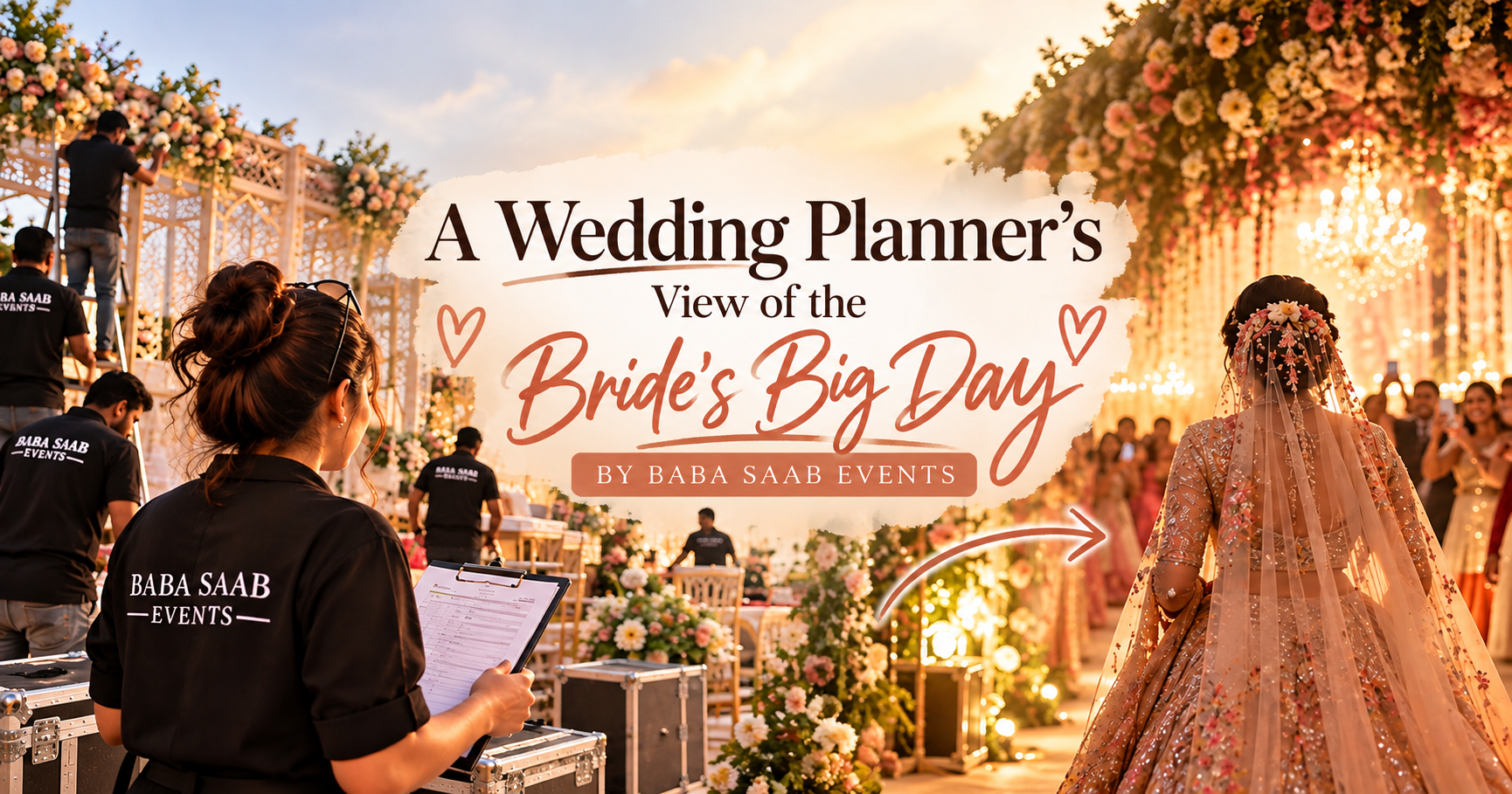
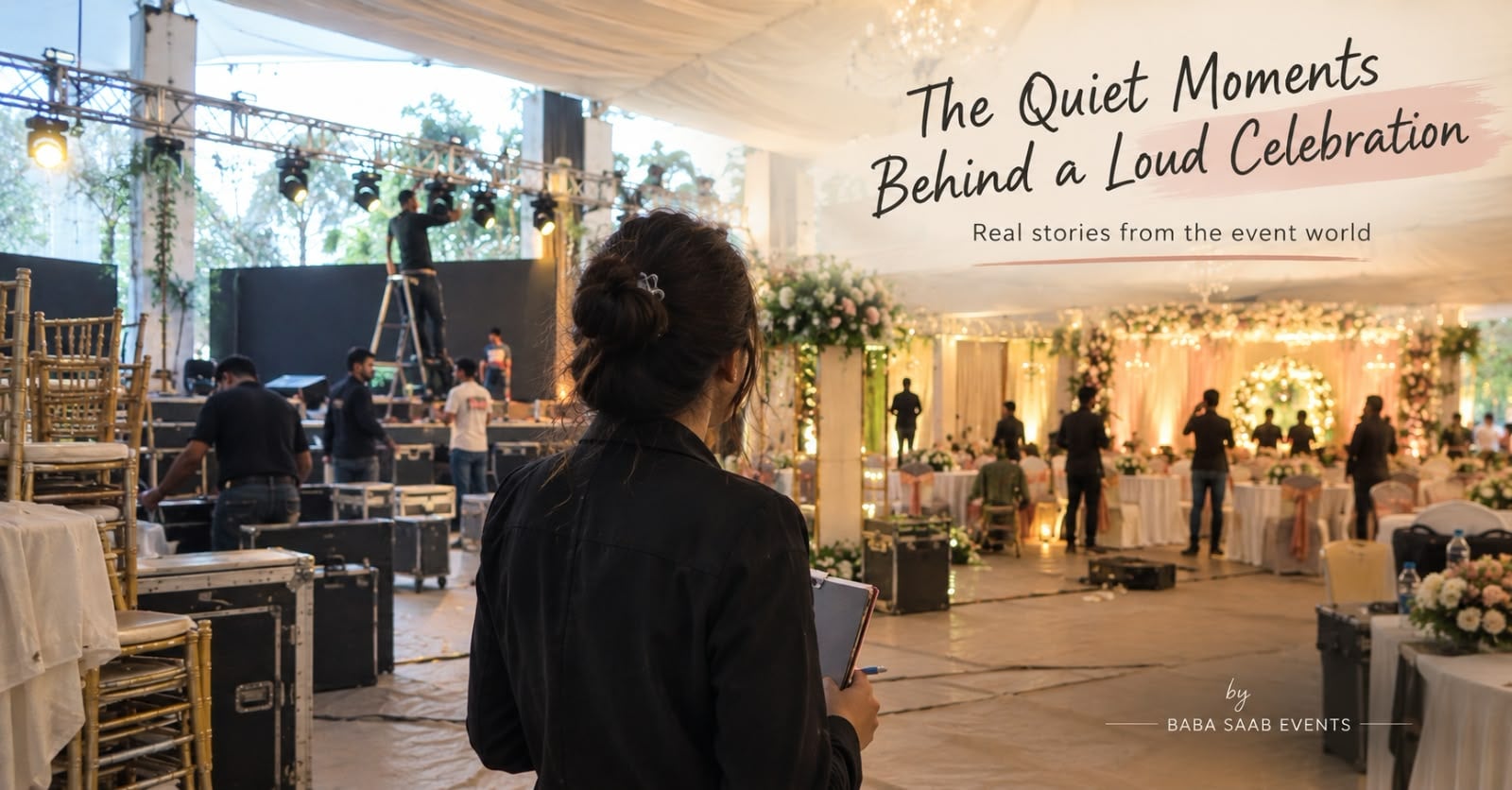
But behind the scenes, hundreds of details are being handled.
Stages are being built.
Lighting is installed.
Floral arrangements arrive.
Sound systems are tested.
Furniture is placed.
Signage is installed.
What guests later see as a beautiful wedding venue often takes an entire team working long hours to create.
Event Day Morning
While most guests are relaxing, event teams are already working.
Final inspections take place.
Décor is reviewed.
Technical checks happen again.
Hospitality teams prepare for arrivals.
Transportation teams stay in contact with guests.
The wedding may begin in the evening, but production starts much earlier.
During the Wedding
Many people assume the work is finished once guests arrive.
Actually, this is when coordination becomes even more important.
Timelines need monitoring.
Guest requests need attention.
Artists need coordination.
Transportation schedules continue.
Hospitality teams remain active throughout the event.
A successful wedding often looks effortless because so much is happening quietly in the background.
After the Celebration Ends
Most guests think the event is over once the music stops.
For event teams, there’s still work left.
Vendor clearances.
Equipment removal.
Guest departures.
Room checkouts.
Final logistics.
Production continues until everything is packed, cleared, and completed.
Why Timelines Matter
Without a timeline, even a simple wedding can become stressful.
When everyone knows what needs to happen and when it needs to happen, the entire event feels smoother.
Families feel more relaxed.
Vendors work better together.
Guests enjoy a better experience.
And most importantly, the couple gets to enjoy their wedding instead of worrying about logistics.
Final Thoughts
A wedding is much more than a single day of celebrations.
It’s the result of months of planning, coordination, and preparation.
From the first planning meeting to the final guest departure, every stage plays an important role in creating a successful event.
Over the years, Himani Sharma and the team at Baba Saab Events have seen that the most memorable weddings aren’t necessarily the biggest ones. They’re usually the ones where every part of the production timeline has been carefully managed, allowing families to focus on what truly matters—celebrating together.
Why Couples Choose Baba Saab Events
✓ Personalized Wedding Planning
✓ Luxury Wedding Décor & Styling
✓ Destination Wedding Management
✓ End-to-End Event Execution
✓ Experienced Wedding Professionals
✓ Creative & Trend-Driven Concepts
Don't leave your special day to chance. Schedule a consultation with our team today and discover how we can bring your dream wedding to life.
Contact Baba Saab Events now and start planning a wedding that your guests will remember forever.
Get in Touch with Baba Saab Events
📞 Phone: +91 94123 90557
📧 Email: himanisharma116@gmail.com
🌐 Website: www.babasaab.com